
Start with a sample that another person can identify
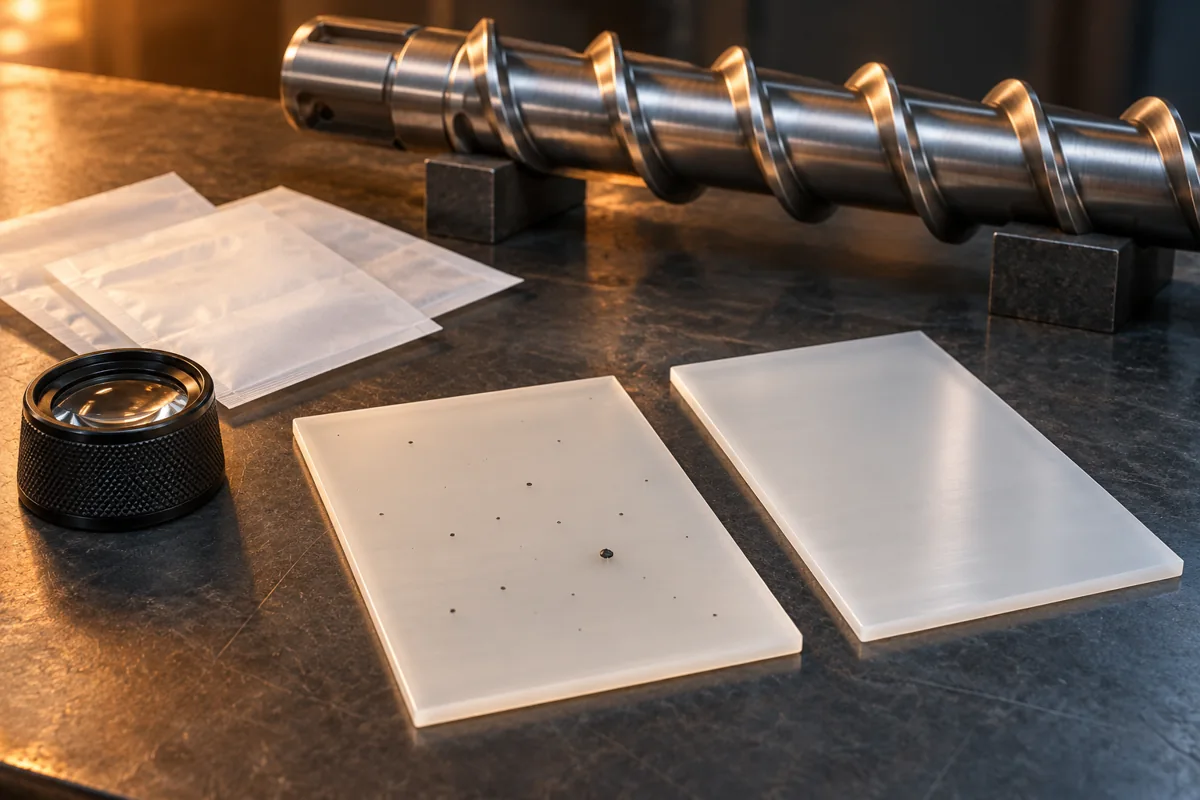
A photograph labelled only “black dots” is difficult to investigate. Link the sample to a machine, product, material lot and point in the run. Keep the original sample under the plant's quality procedure and identify where the photograph was taken. A scale or agreed reference in the image can help a reviewer understand appearance; it does not establish the chemical identity of the inclusion.
Write the observation before the explanation. “Dark inclusions appeared after restart” preserves a fact about timing. “The screw is producing carbon” assigns a cause that still needs evidence. Keep these two statements in different fields so that a purchasing request does not accidentally turn a working hypothesis into a confirmed fault.
Build a timeline around changes, not just the latest setting
Record when the issue first appeared relative to startup, a material or color change, a stoppage and any approved cleaning activity. State whether it was continuous or intermittent, and whether comparable retained samples exist. Include changes in the material lot, recycled-content source or associated equipment when known. Mark an unknown rather than reconstructing an exact history from memory.
Asaclean's carbon-contamination guidance identifies degradation and retained contamination as relevant investigation topics. It also discusses locations beyond the screw itself. That background supports reviewing the process boundary; it does not prove that every dark inclusion is carbon or that a particular purge product is suitable for the material being processed.
Use a five-line evidence register
The following register is an original way to organize a review packet. It is not a universal operating specification. Give each line an owner, a reference and an unresolved question:
- Sample identity: machine, product, lot, sample time and retained sample identifier. Question: can the reviewer connect the image to the actual run?
- Event history: startup, changeover, stoppage and approved cleaning records. Question: what changed before the first affected sample?
- Process context: the approved setting sheet and recorded conditions that the process owner considers comparable. Question: were the requested conditions actually achieved?
- System boundary: feed preparation, plasticizing assembly and relevant downstream equipment included in the review. Question: which areas have evidence, and which have only assumptions?
- Condition findings: any existing qualified inspection, component identity and drawing reference. Question: is there a documented reason to repair or replace a particular part?
Keep attachments referenced by sample number rather than by ambiguous filenames. Do not include a confidential formulation in a public URL or a loosely shared image filename. Use the plant's agreed channel for sensitive project records.
Keep a process investigation separate from a wear inspection
A record of inclusions and a dimensional wear report answer different questions. If a qualified inspection has already found a component problem, retain its method, reference and decision owner alongside the sample record. If no inspection exists, say so. Appearance alone cannot establish a wear limit, surface-layer condition or the remaining useful life of the assembly.
The Dynisco Extrusion Processors Handbook treats troubleshooting as a review of material, equipment and achieved processing conditions. Its recordkeeping approach is useful background for a coordinated investigation. It does not provide a project-specific diagnosis for an uninspected Hongfa component, and this article does not transplant its process settings or acceptance limits.
Agree what the next action is intended to establish
The next action might be a material review, a review of the approved cleaning history or a qualified inspection. Ask the responsible technical owner what observation would change the current hypothesis. A proposed action should have an evidence objective, an approved method and a documented review point. Do not improvise temperature changes, dismantling or purging from an online checklist; use the relevant equipment, material and cleaning-product instructions and the plant's qualified process.
For example, a hypothetical buyer may have samples from startup but no record of the preceding material change. Resolving that history can make the review more useful than immediately requesting a visually similar replacement screw. This is an illustration of an evidence gap, not a Hongfa customer case or a claim about the cause of an actual defect.
Turn any component request into a defined scope
If the review leads to a component enquiry, state what will be retained and which findings support the proposed replacement. Use the wear-record guide for measurement traceability and the service scope to frame the project boundary. The quality information guide helps identify the records needed for acceptance.
Prepare a project brief with information you are authorised to share, then email it through your agreed contact channel. Downloading the brief only saves a local file and does not upload drawings. Component suitability, service scope and any acceptance decision require project-specific confirmation; replacing a screw is not presented here as a guaranteed cure for black specks.
Sources and further reading
- Asaclean — Carbon contamination and black specks
- Dynisco — Extrusion Processors Handbook, 2nd edition
Technical reviewer: pending assignment. This planning guide does not replace qualified diagnosis, plant procedures or project-specific acceptance. Source suppliers' claims do not establish Hongfa performance or capability.